

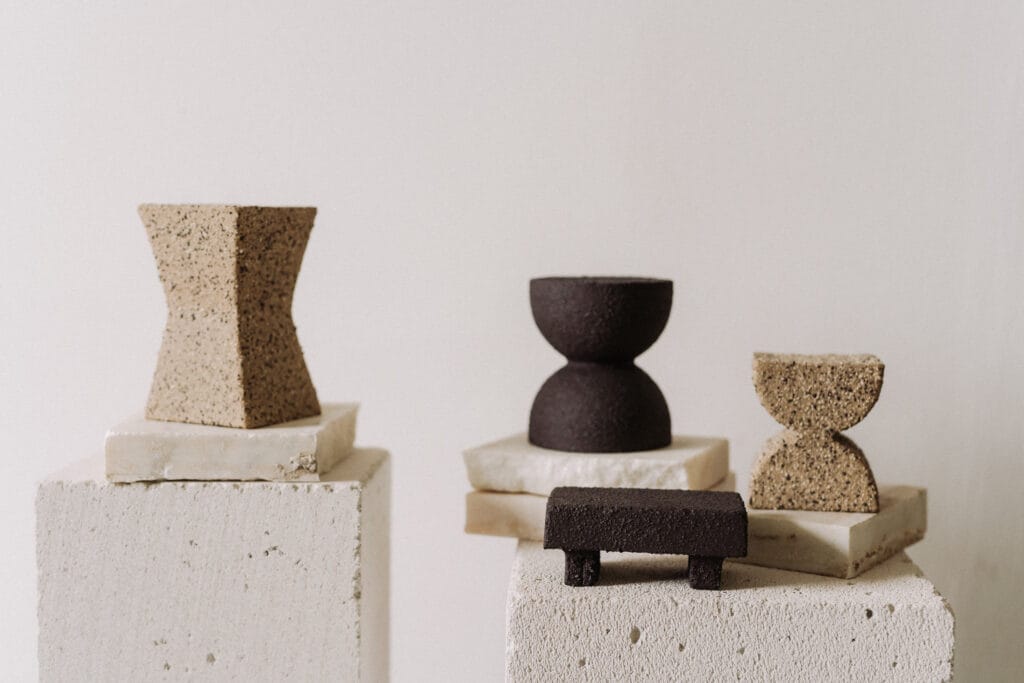
A POEMI piece isn't meant to be stored away, but to be used: for breakfast, for dinner with friends, every day, year after year. And when well cared for, ceramicware will truly last for decades.
Because each piece is hand-shaped and hand-glazed, it needs a little attention to keep its beauty over time. Nothing complicated: a few simple rules, easy to remember, that make the difference between a mug that ages gracefully and one that wears out after a few months.
Below we show you what lasts, what to avoid, and what to do if, nevertheless, a beloved item breaks.
Washing: machine vs. hand
POEMI products are dishwasher-safe. The only thing to keep in mind is how you arrange them: leave some space between the pieces so they don’t bump into each other during the wash cycle, as that direct contact can cause mechanical damage.
Hand washing remains, of course, an equally good alternative, especially for the pieces you care about most. Use a soft sponge and lukewarm water. And if you have just taken a hot piece out of the oven, let it cool down naturally before washing it: the sudden transition from hot to cold is exactly the kind of thermal shock that ceramics feel the most.
Oven, microwave, refrigerator: what survives and what doesn't
When it comes to the microwave, the answer is simple: yes. You can safely heat your food or drink directly in the POEMI container without any worries.
In the oven, things are a little more nuanced. Ceramic tiles fired at high temperatures withstand the normal temperature variations of everyday cooking well, but for actual baking in the oven, we recommend using only dishes specially designed for this purpose. For them, use heat-insulating gloves, avoid direct flame or the stovetop, and above all, avoid moving a dish directly from the refrigerator into the hot oven: the large and sudden temperature difference is precisely what puts stress on the material.
The same simple rule applies to the refrigerator: it's fine to store food in POEMI containers in the fridge, just avoid subjecting them to sudden temperature changes from one extreme to another.
Stains, scratches, and cutlery marks
Cutlery marks do not necessarily mean scratches. Sometimes, metal cutlery can leave grey or dark marks on the glaze. These are usually fine metal deposits, not damage to the glaze. In many cases, they can be removed with a gentle ceramic cleaning product, without using abrasive materials.
Unglazed areas, usually the base or foot of a piece, are the most exposed to stains. If you notice a persistent stain, clean it as soon as possible. Unglazed areas are more porous and can more easily absorb liquids and food pigments, so stains are easier to remove when they are fresh.
For everyday marks and minor scratches, prevention is simpler than repair: use a soft sponge instead of an abrasive one, avoiding metal sponges or abrasive cleaning powder on the glaze. When washing multiple pieces at once or storing them in the cupboard, avoid crowding them.
If it breaks anyway: Kintsugi
No matter how careful you are, ceramics remain a material that can break. And, unlike many other objects, a broken piece does not necessarily mean a lost piece.
Kintsugi is the ancient Japanese art of repairing broken ceramics with gold: the fracture lines are not hidden, but highlighted, transforming imperfection into part of the object's story. It is a philosophy that fits perfectly with handmade ceramics, where nothing is perfect from the beginning and that is precisely what gives it character.
If you want to try this technique at home, I have prepared a set kintsugi, with everything you need to give a second life to a cherished piece.
Briefly
- Wash the products before first use
- You can use the dishwasher, but leave space between the dishes
- Microwave safe, for heating food and beverages
- When baking, use only oven-safe dishes and heat-resistant gloves
- Avoid thermal shocks: do not transition abruptly from the refrigerator to the hot oven or from hot to cold
- Do not use the products directly on the flame or stove.
- Clean stubborn stains immediately, especially on unglazed areas.
- Use a soft sponge, without metal or abrasive sponges.
- If it breaks, try the Kintsugi kit instead of throwing the piece away
 Romanian
  English