

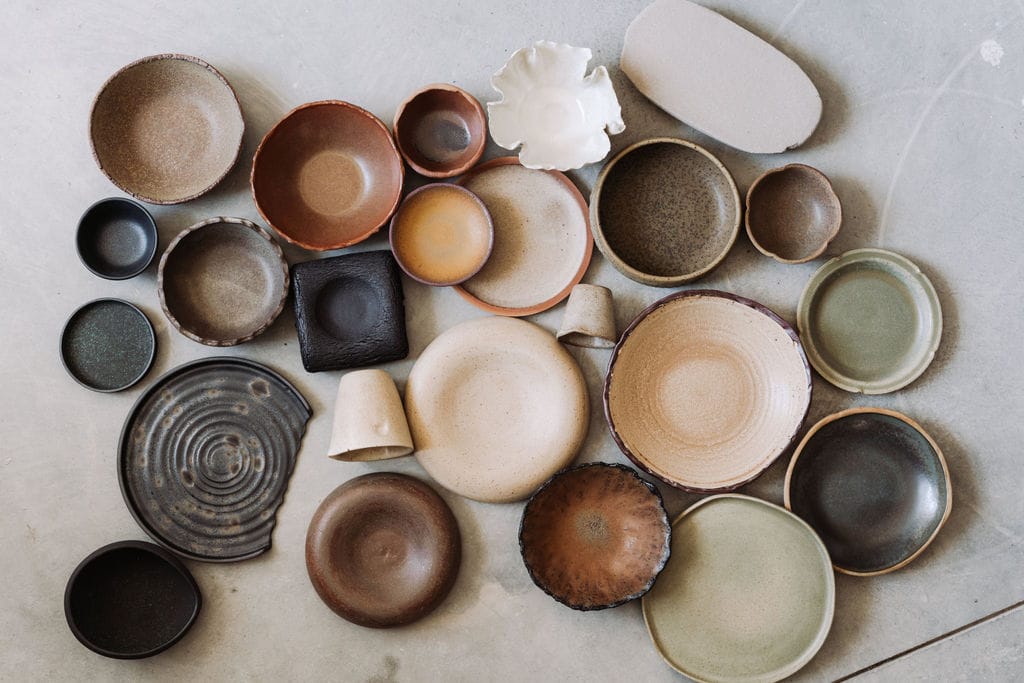
The word „ceramics” is one of those that we use for many different things: a clay mug bought from a craftsman, a thick stoneware bowl from your everyday table, a fine, white plate, almost translucent. All „ceramic,” but not at all alike.
Just as the essence of wood tells you something about the durability and quality of an object, the material behind a ceramic piece tells you how it will perform over time: how long it lasts, how it is cared for, how easily it stains or chips. It is worth knowing the difference before you choose.
The Clay: The Oldest Story
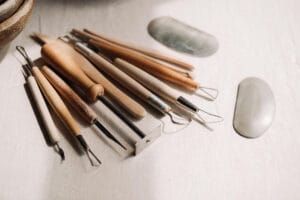
Lutul (clay, „earthenware”) is a reddish-colored clay, extracted and processed locally. It is the material generally used by potters at the potter's wheel, the oldest and most accessible of all.
It is fired at low temperatures, which leaves it porous: it absorbs moisture, stains more easily, and is more fragile, with a higher risk of chipping or breaking. On the other hand, it is a cheap and readily available raw material, so clay objects are usually very affordable.
Ceramics: everyday floor tiles
The term ceramic covers, in turn, two major categories: low-fired ceramics (earthenware, which behaves similarly to clay) and ceramic tiles (stoneware), high-fired.
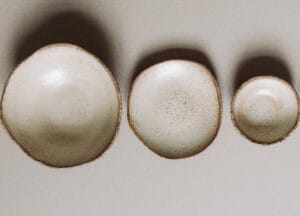
Ceramic stoneware is waterproof, does not stain, is resistant and durable, the kind of piece you use daily without worry. It contains chamotte, meaning sand particles of different grain sizes, from 0.2 mm to 2 mm, which makes it a dense material: an object made of ceramic stoneware is heavier than the same object made of clay or low-fired ceramics.
The products in the POEMI collections are made exclusively from ceramic tile, in a variety of colors and textures. Precisely because ceramic tile is naturally waterproof, some of the pieces are left unglazed or partially glazed, allowing the material to show through.
Porcelain: fineness and translucency
Yes the porcelain it is divided into two categories, for which the Romanian language does not yet have two distinct terms, so we keep the English names: „porcelain” and „bone china”.
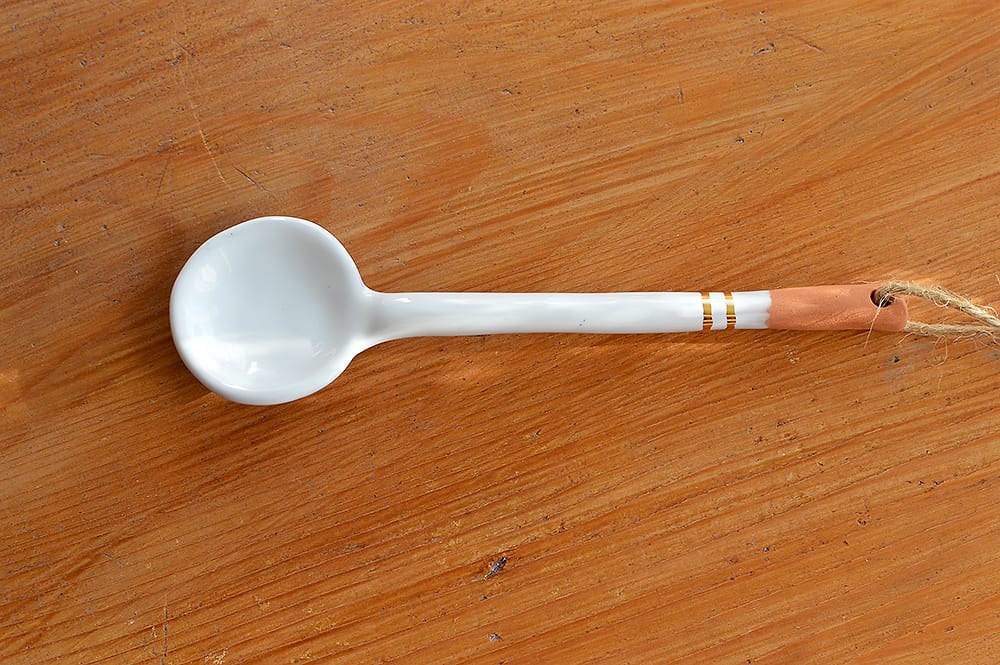
Bone china porcelain„ It is made, as its name suggests, from the ash of animal bones (especially beef bones), in a proportion of 30–40%, plus other components such as clay, silicon, quartz, feldspar, and kaolin. It is a type of porcelain that is more expensive, more durable, finer, and translucent, and, most noticeably, very white. Because it is an expensive raw material, it is rarely found in the product offerings of suppliers to the ceramics industry.
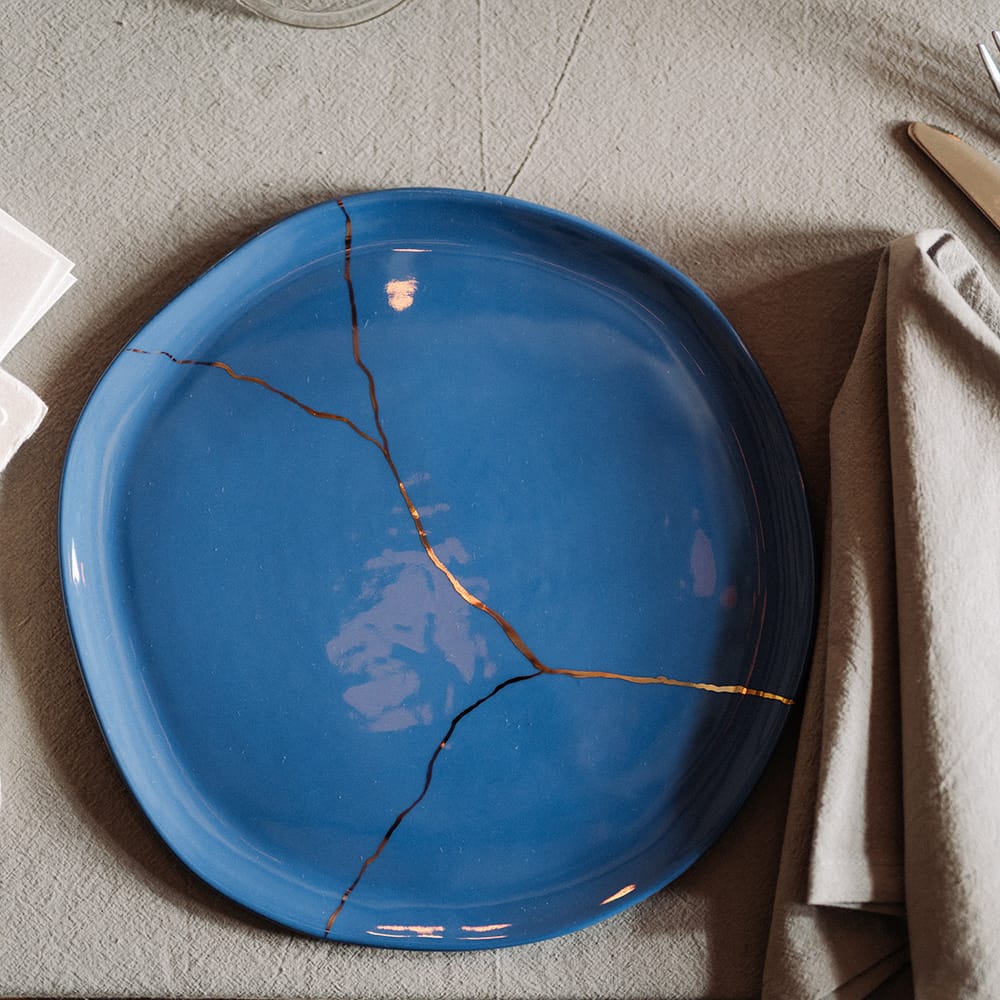
Ordinary porcelain„ it does not contain bone ash, which makes it less „precious” as a raw material. It can be produced in a variety of colors (for example blue or black) and can be fired at both low and high temperatures. Over time, our collections have also included porcelain pieces alongside stoneware ones, because each material has its own place.
What do you choose for your home
There is no universal answer: there is only what suits you, your way of cooking, of serving meals, of living with the objects around you.
If you want a piece with artisanal soul, with natural variations in color and texture, and you don't mind caring for it with a little more attention, clay has its own charm. If you want durability and an object you can rely on every day, without worry, ceramic stoneware is the right choice. If you want fineness, translucency, and a touch of elegance for special occasions, porcelain is the answer.
Beyond the material, choosing a ceramic piece is also about what you want to feel when you use it. If you want to dive deeper into this part as well, we have prepared a dedicated guide for you: how to choose ceramic tiles for your home.
And if you want to see what all these materials look like in practice, in handcrafted pieces made in our workshop in Sibiu, you can browse our products. And you can find more guides at the POEMI blog.
 Romanian
  English